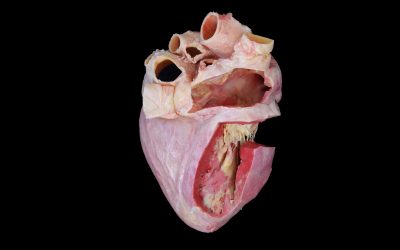
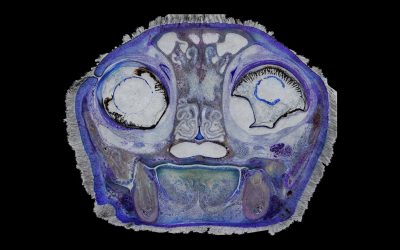
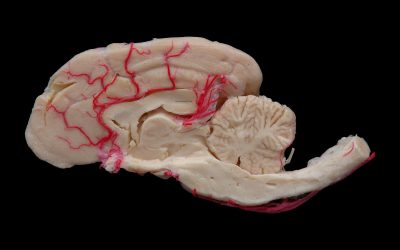
OrganKits is a European Erasmus+ project coordinated by the University of Murcia that has developed, implemented and evaluated an educational model for STEAM teaching in secondary education. Its approach integrates plastinated organs with interdisciplinary activities that connect anatomy and health with social and environmental issues.
The project addresses a specific need: providing schools with real, durable anatomical materials that can be handled repeatedly, together with a methodology for using them across different subjects. On this basis, the OrganKits Educational Model combines anatomical specimens, project-based learning activities and teaching support resources.
Six Educational Kits Connecting Health and Society
The model is organised into six thematic areas, each known as an OrganKit:
- CardioHealth & Emotions: cardiovascular health and emotions.
- NeumoHealth & Environment: respiratory health and the environment.
- NutriHealth & Wellness: nutrition and well-being.
- MentalHealth & Mindfulness: mental health and mindfulness.
- SportsHealth & Dependence: health, sport and dependence.
- ReproHealth & Gender: reproductive health and gender.
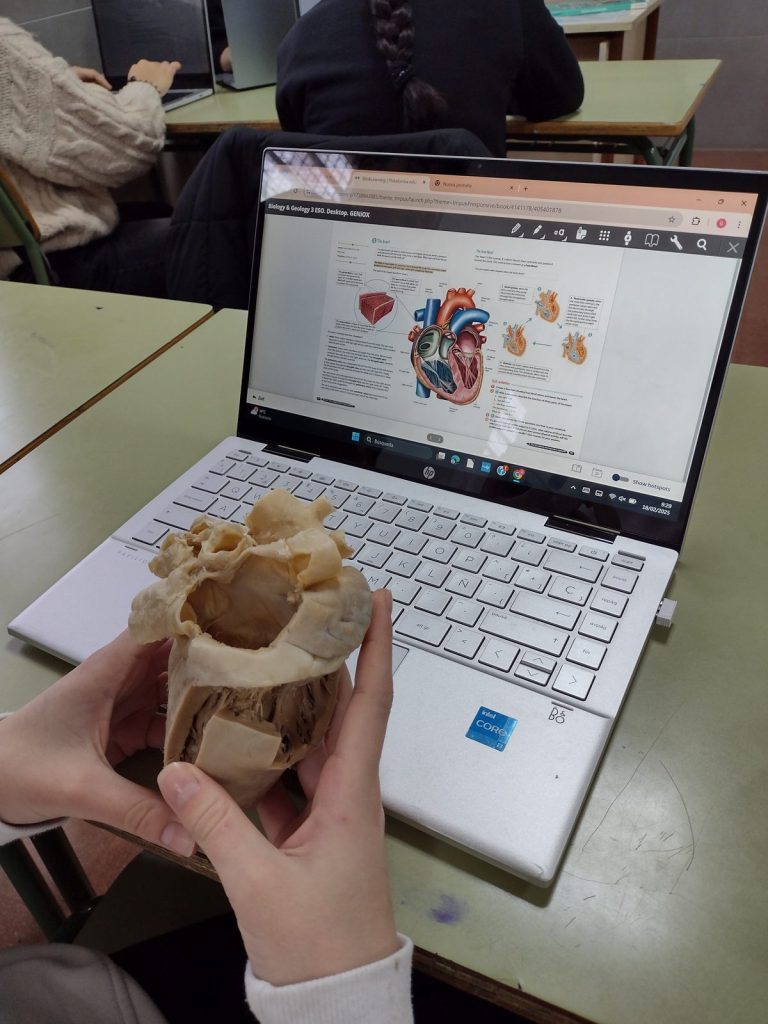
Each OrganKit brings together anatomical materials, a STEAM learning framework and resources for classroom implementation. Plastinated organs form the physical core of the activities and serve as a key source of motivation. Educational guides and teacher guides structure the learning process, while atlases, digital resources and interdisciplinary implementation maps support classroom delivery.
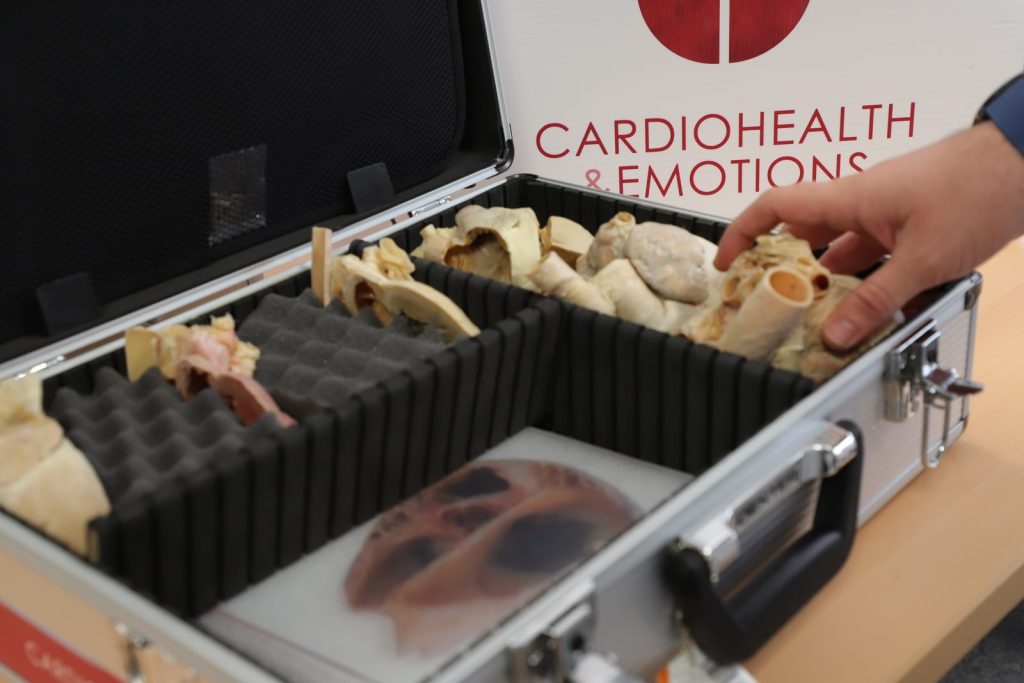
The plastinated specimens, obtained from pigs, cattle and sheep, allow students to study real anatomical structures and use them as a starting point to investigate issues relevant to everyday life. The pedagogical innovation lies in extending their use across STEAM subjects, connecting anatomical content with activities and questions that draw on several disciplines.
Materials and Resources Developed
The project produced 479 plastinated organs, 95 more than initially planned. Six complete educational packages were developed, available in Spanish, English, Italian, Greek and Turkish. Together, these materials comprise 30 educational guides, 30 teacher guides, more than 100 digital educational resources and six STEAM learning pathway maps. They also include six anatomical atlases accessible through QR codes.
These materials allow different levels of adoption. A school can select an individual activity, work with one OrganKit or implement a broader programme, adapting the resources to its curriculum, the subjects involved and students’ needs.

Findings from the Educational Evaluation
Students particularly valued the opportunity to observe and handle real organs, reporting that the experience supported their understanding and made the activities more engaging. Teachers highlighted the quality and ease of handling of the specimens, the usefulness of the guides and their ability to capture students’ attention. Focus groups reported perceived improvements in motivation, participation and three-dimensional understanding of anatomy. These findings support the educational usefulness and acceptance of the model in the participating settings.
Inclusion and Transfer to Other Settings
The project also explored applications in inclusive education. Experiences were documented with students with visual impairments and those with attention deficit and/or hyperactivity disorders. The resources were used at the Çağla Pınar Rehabilitation Centre in Türkiye and in workshops for young people experiencing social vulnerability at the Museum of Science and Water in Murcia. Following the project’s completion, they were also used in the hospital classrooms of the Virgen de la Arrixaca University Clinical Hospital.
Outreach activities extended to three science museums. The permanent exhibition at the Museum of Science and Water in Murcia received more than 10,000 visitors during its first three months. The project website also recorded 10,750 unique visitors, and the International Conference on OrganKits brought together 77 participants. The project’s final report received an evaluation score of 93 out of 100.
Discover-IN’s Contribution
Discover-IN participated as the technical partner responsible for developing and producing the plastinated specimens. Its expertise in anatomical preservation provided the materials on which the educational partners built and implemented their teaching activities.
This contribution was essential to meeting the project’s practical requirements: preserving anatomical detail, enabling repeated handling and facilitating storage and transport between schools. The production of durable specimens, organised into carrying cases, supported their use throughout the implementation cycles and their subsequent loan to associated schools.
The production process also incorporated sustainability measures, including reduced formaldehyde use, acetone recovery and recycling, the selection of local suppliers and the use of recyclable aluminium carrying cases.
Discover-IN’s contribution lies in applying its specialist knowledge of plastination to the needs of secondary education. In collaboration with the University of Murcia and the educational partners, this technical expertise enabled anatomical specimens to become the foundation of an educational model combining reusable materials, structured activities and opportunities for adaptation to other learning settings.