
Equine ascendent colon and ceacum (dilated)
EqOcol
More images
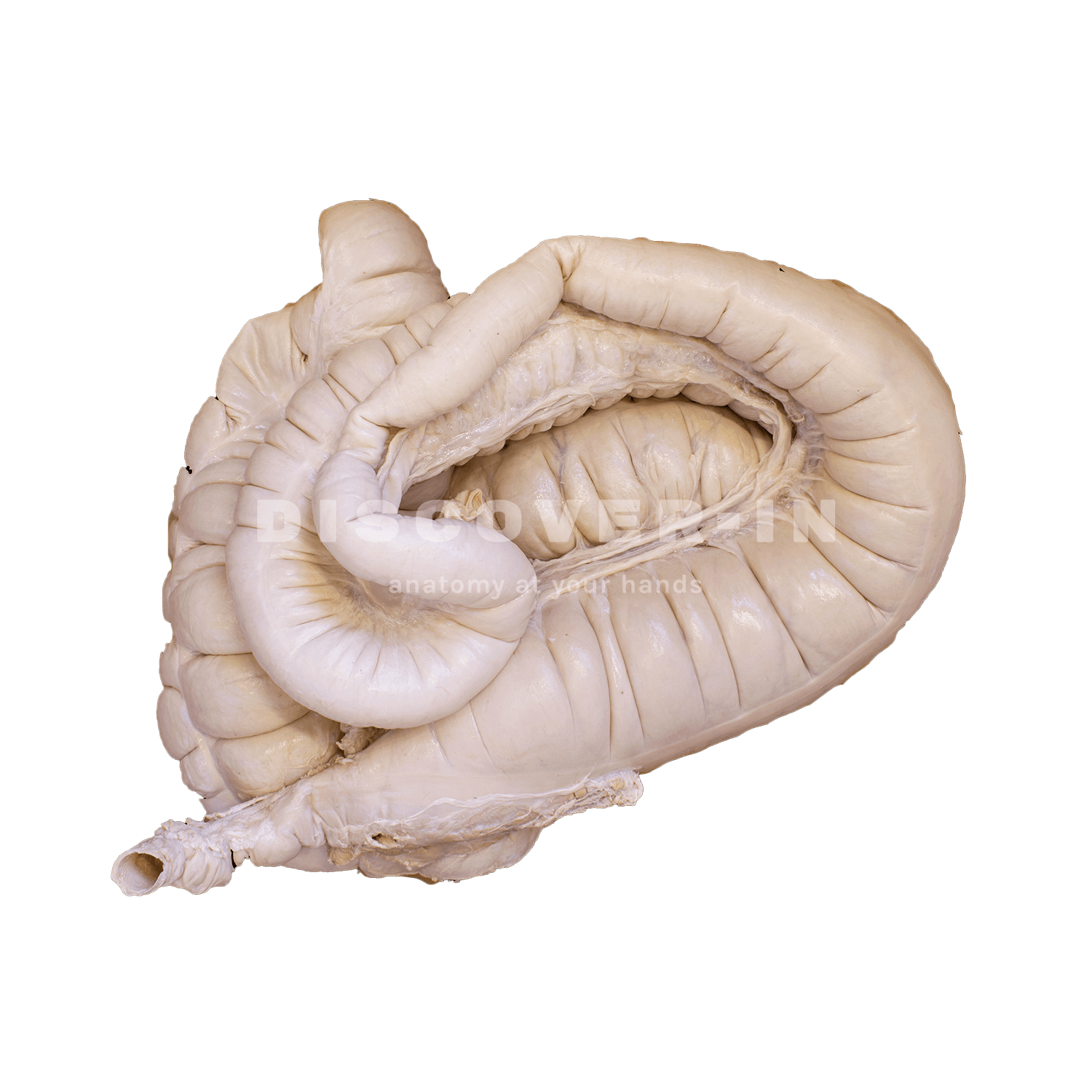
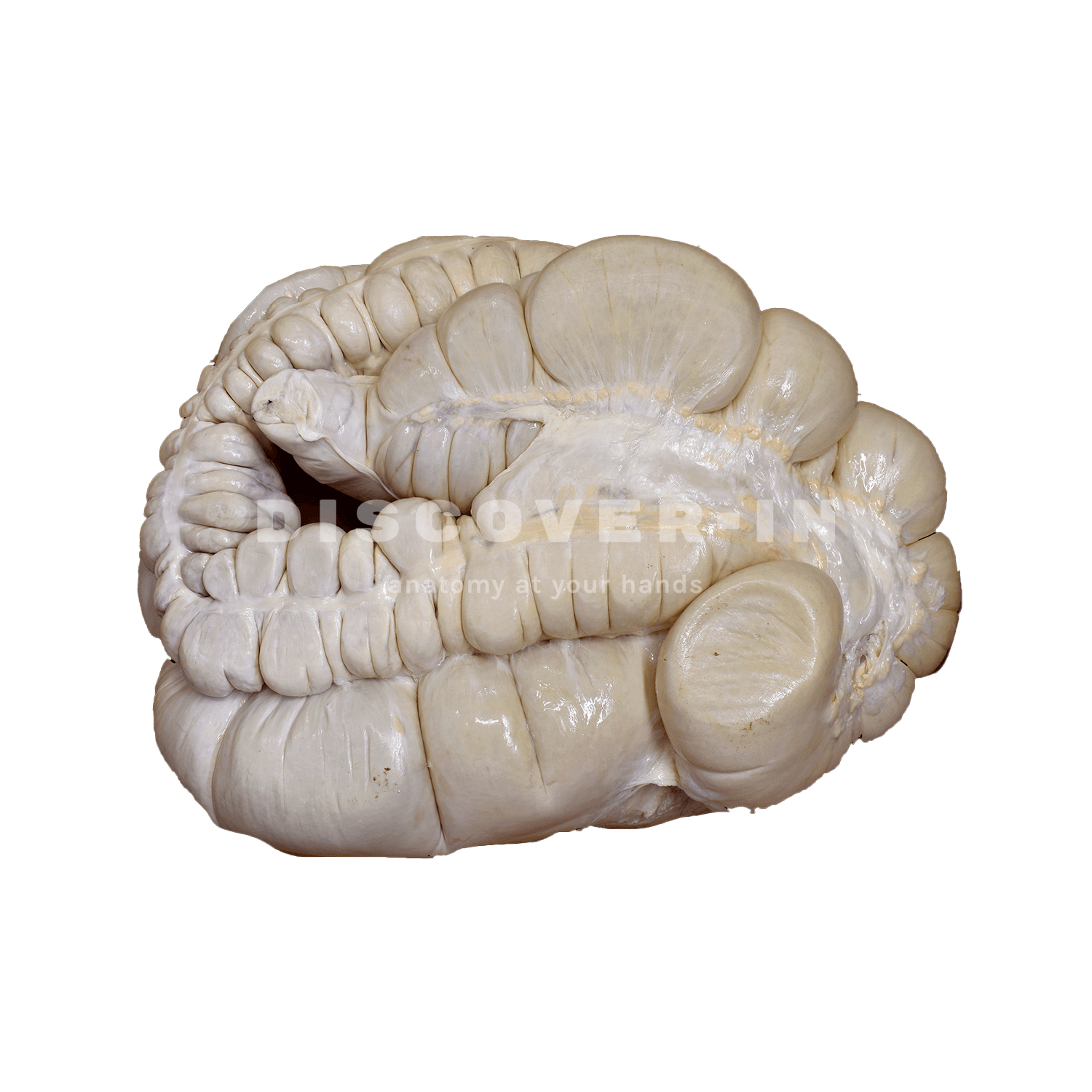
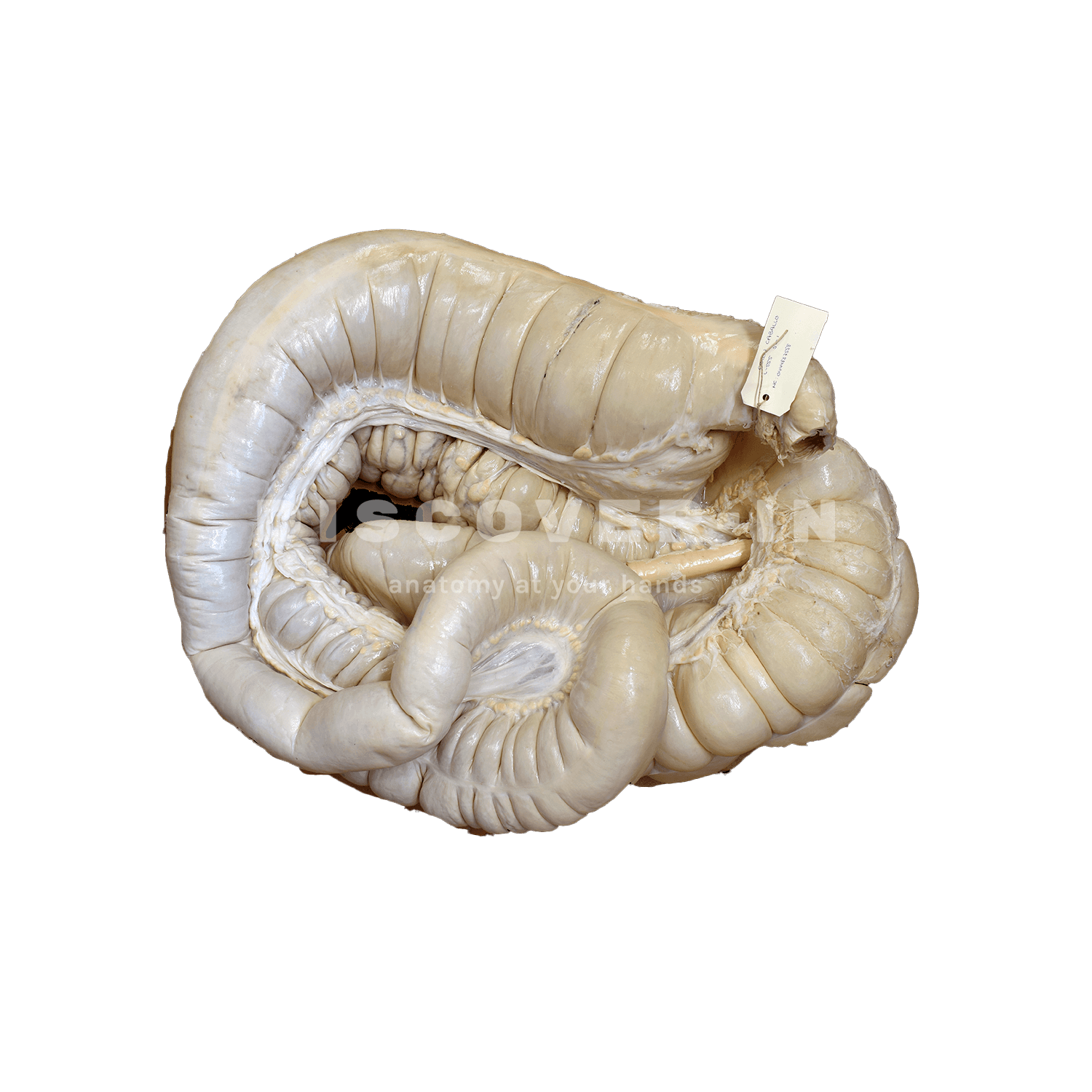
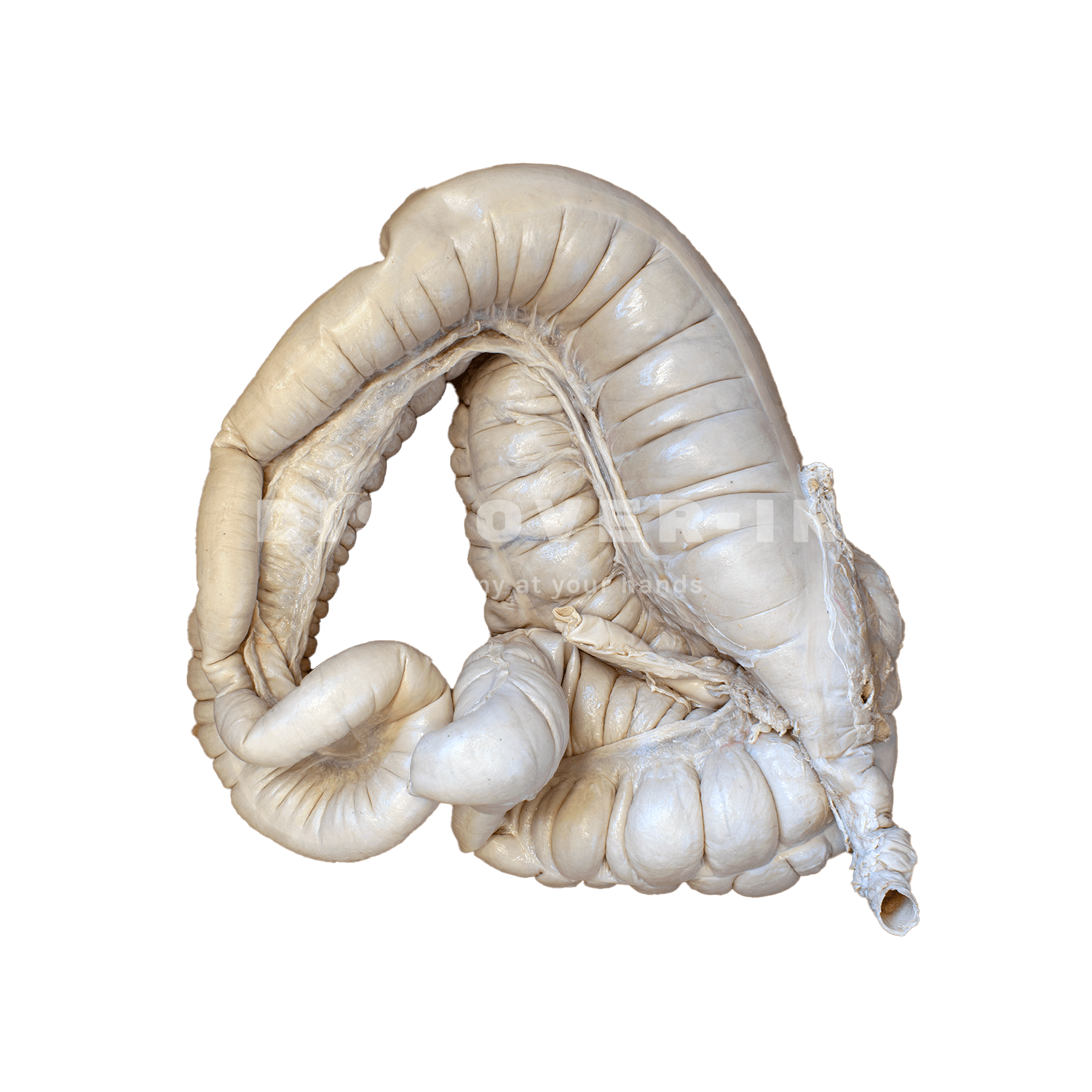
What is it in this specimen?
What we can learn from this specimen?
- Differentiate the caecum from the ascending colon based on external morphology: the caecum is identified by its base and apex together with its taeniae, whereas the ascending colon shows prominent haustra and several taeniae along its dorsal and ventral portions, as well as at the pelvic, sternal, and diaphragmatic flexures.
- Understand why the equine large intestine is prone to high-volume pathology: its large calibre and sacculation predispose it to impactions, gaseous distension, and displacements.
- Develop a spatial understanding of the loops of the ascending colon, which provides the anatomical basis for many patterns of equine colic and is useful for interpreting clinical findings.
How can be this specimen used for teaching?
- Establish an anatomical–clinical correlation for equine colic by linking the visible anatomy with common pathologies (e.g., large colon impaction, displacements, and volvulus), using the size of the compartments together with the haustration and taeniae as key identifying features.
- Develop basic surgical orientation skills by practising the rapid recognition of the ascending colon and its different portions on the right and left sides versus the caecum through macroscopic landmarks such as sacculations and longitudinal bands, before approaching concepts of intestinal manipulation and surgical decision-making.