

Canine larynx and hyoid
CaOlrx
More images
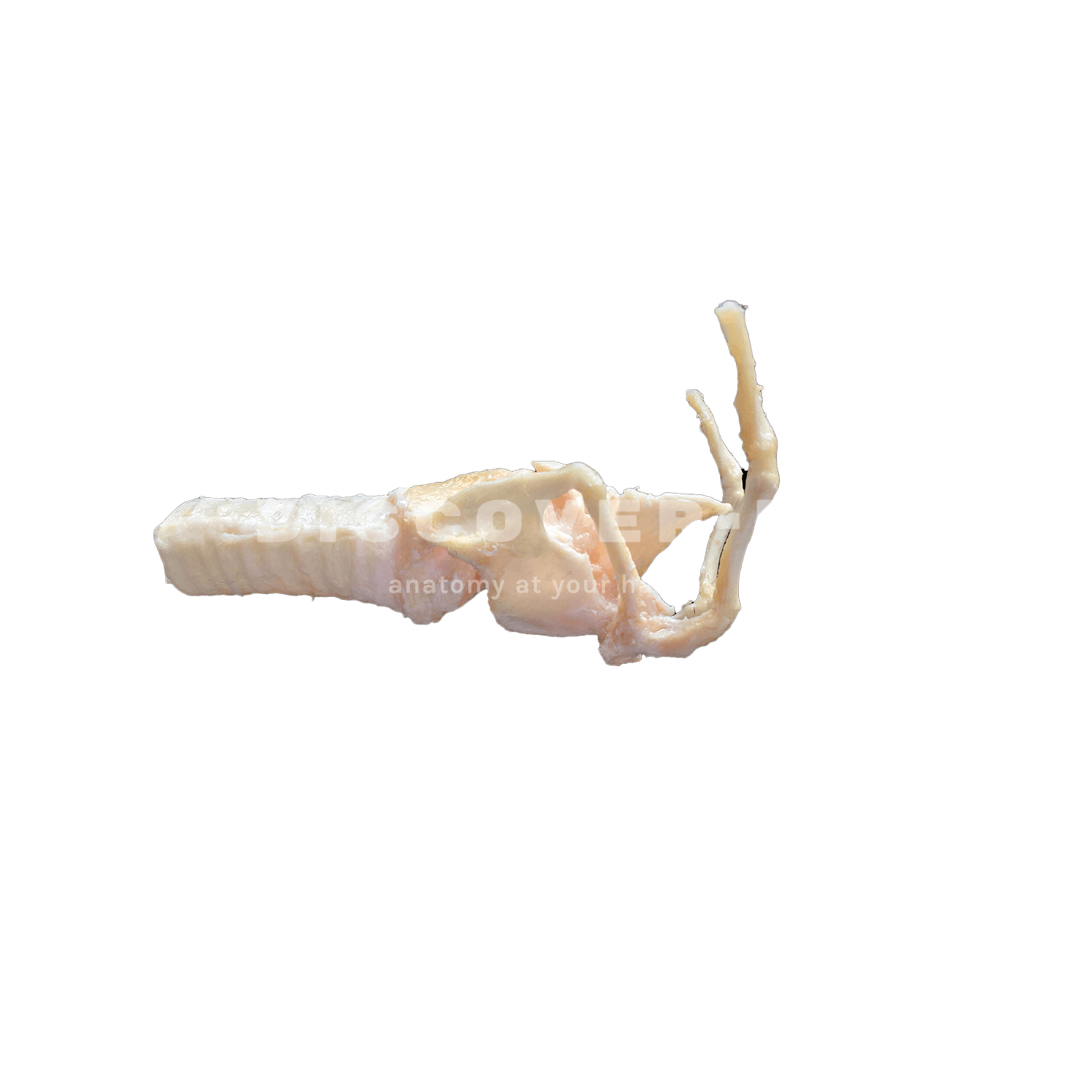
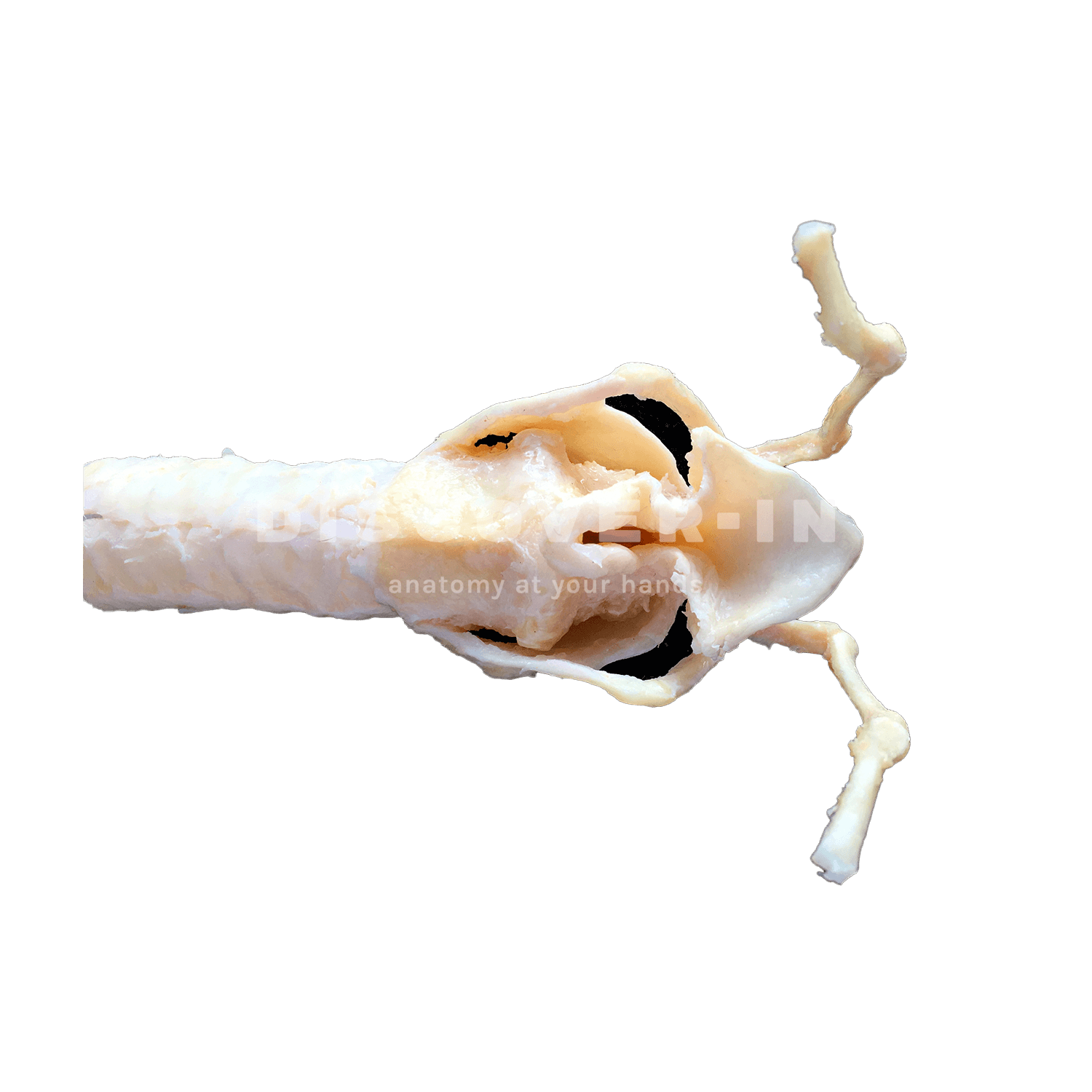
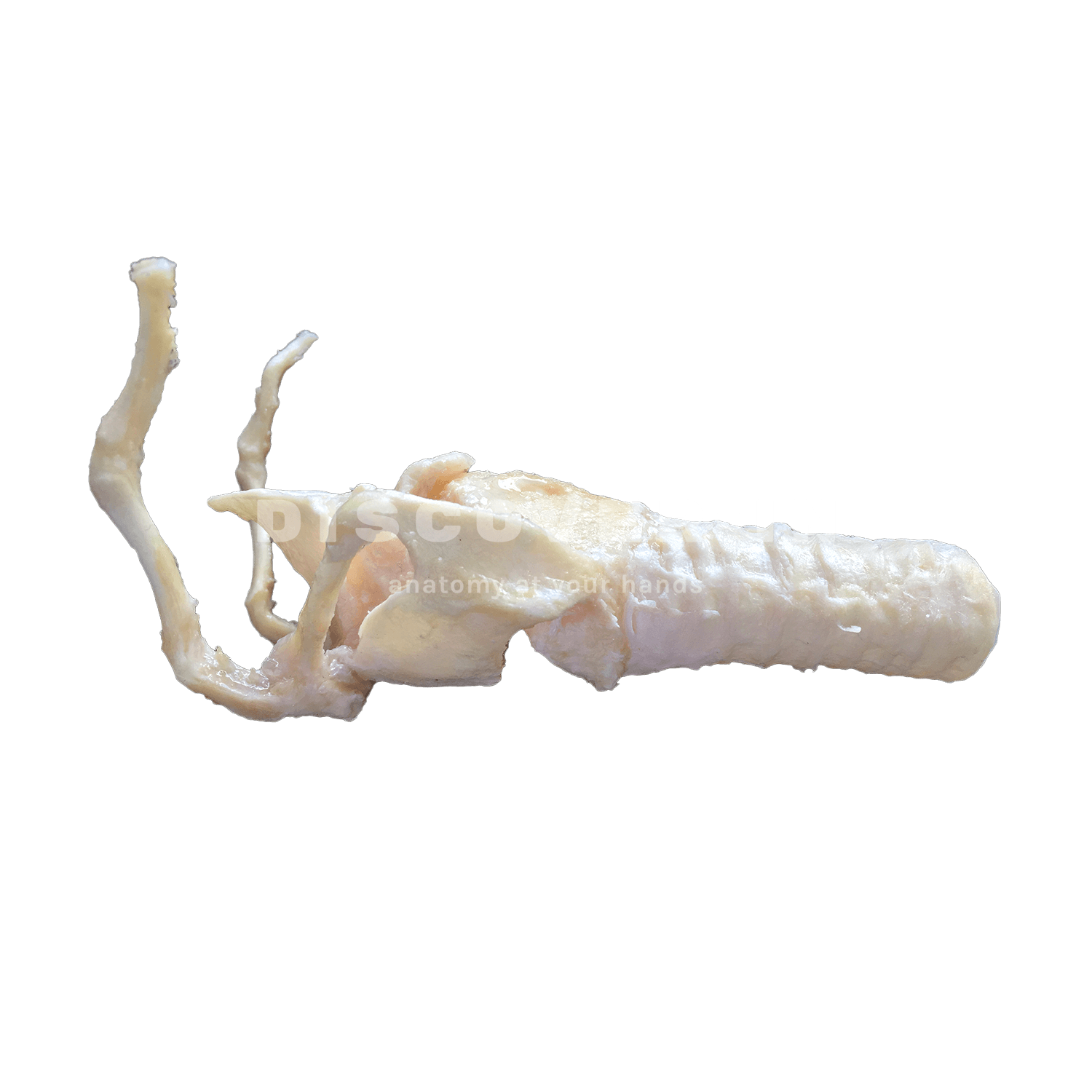
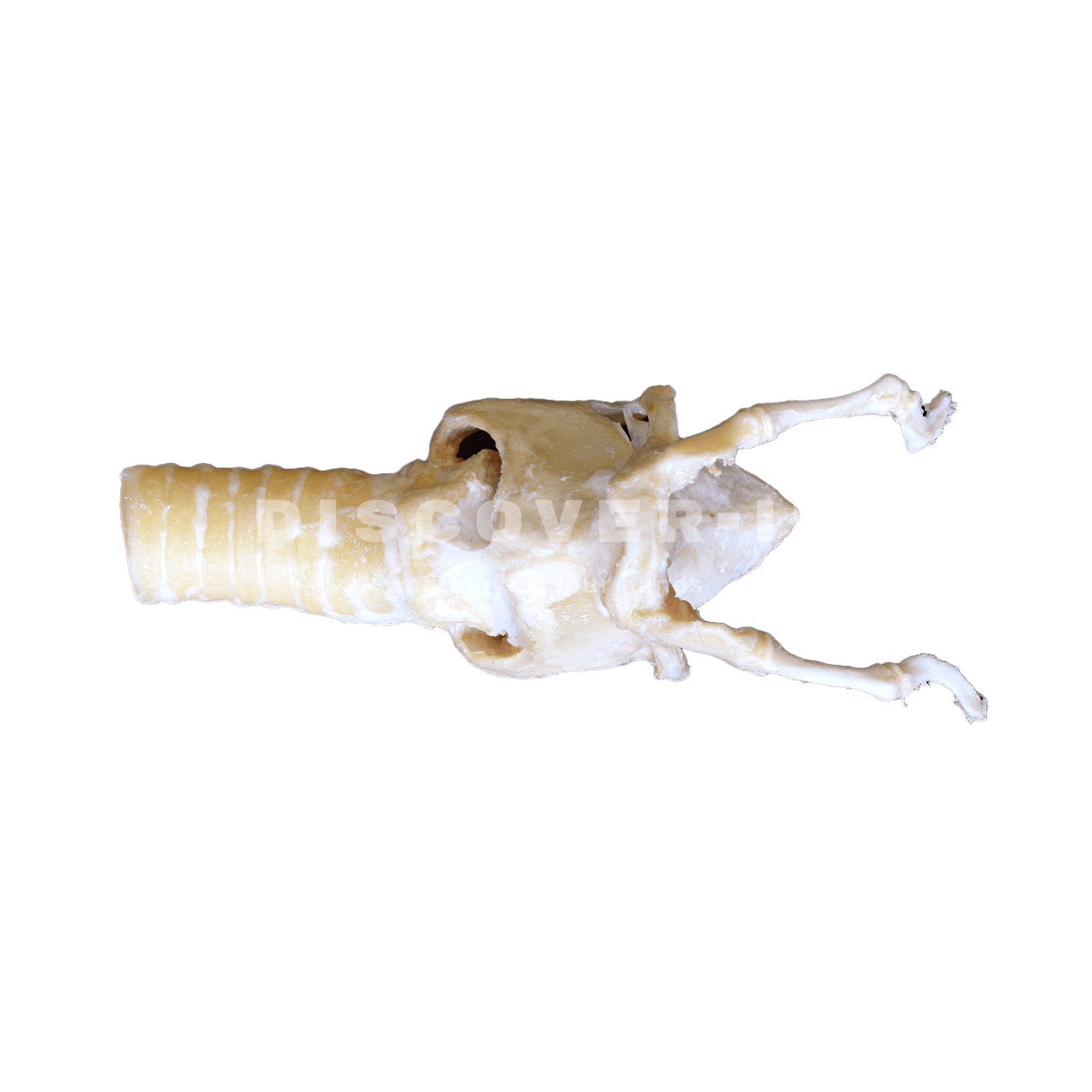


What is it in this specimen?
Canine larynx with the hyoid apparatus, shown in right lateral and dorsal views. The laryngeal cartilaginous framework is visible, including the epiglottic cartilage rostrally, the thyroid cartilage forming the main lateral walls, and the cricoid cartilage caudally as the transition toward the proximal trachea with its annular tracheal cartilages. Dorsally, the laryngeal inlet (aditus laryngis) and supraglottic region can be appreciated, and the hyoid apparatus is attached rostrally to the larynx, with the paired hyoid elements extending laterally from the body of the hyoid toward the laryngeal suspension complex.
What we can learn from this specimen?
- Identify the main laryngeal cartilages (epiglottic, thyroid, cricoid, arytenoid) and relate their shape to airway patency and protection during swallowing.
- Trace the continuity from larynx to trachea, focusing on how the cricoid cartilage forms the caudal “ring” before the tracheal annular cartilages.
- Understand the suspensory role of the hyoid apparatus in positioning the larynx and stabilizing the rostral airway during deglutition and phonation.
How can be this specimen used for teaching?
- Clinical airway correlation: use it to explain sites of upper airway obstruction and the anatomical landmarks relevant to laryngeal exam and endotracheal intubation.
- Surgical landmarks: highlight the thyroid–cricoid region and rostral laryngeal inlet as key reference areas when discussing approaches to the larynx and trachea.
- Functional anatomy stations: have students orient the specimen in lateral vs dorsal views and verbally map “food vs air” pathways, linking epiglottic position to aspiration prevention.